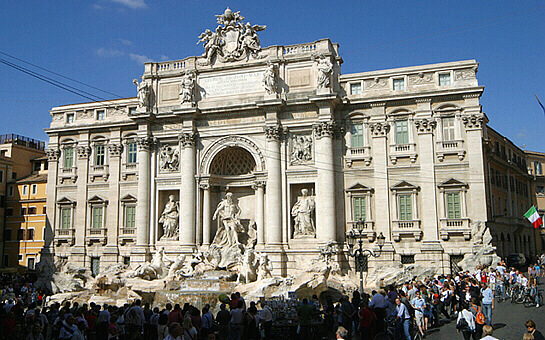
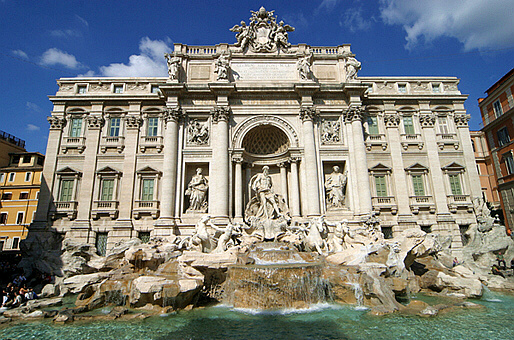
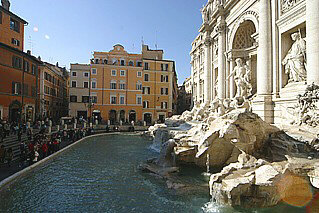
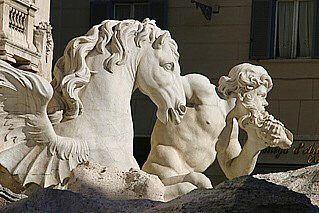
Rome Trevi Fountain - a miniature world of Mediterranean symbols
For a complete knowledge, please visit also the specific pages about the various aspects of this area:
|
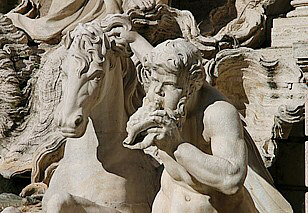
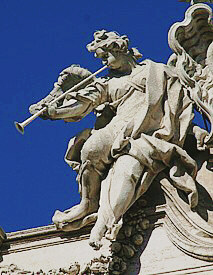
| Trevi Fountain: probably the most beautiful fountain in the world, it is surely the most watched. Mesmerised crouds watch it at all times. Even in the dead of coldest nights you find people watching it.. |
|
APARTMENTS FOR RENT IN THIS QUARTER
"ROME SEAGULLS": luxury panoramic penthouse, with two terraces with stunning views of all Rome, two bedrooms (matrimonial and twin beds), two sitting rooms, two sparkling bathrooms (shower enclosure and bathtub), kitchen. Remarkable equipment. Elevator.
"LEONARDO" (Via della Croce): a large three double bedrooms, sitting room, 2 bathrooms, terrace apartment hosting up to 6-7 persons. Complete equipment.
"ANITA" (Via delle Carrozze): a large upscale suite with three bedrooms, sitting-dining room, three bathrooms, large kitchen, remarkably equipped (3-6 persons).
"REGINA" (Via San Giacomo): a large upscale suite with three bedrooms, sitting room, separate dining room, three bathrooms, large roof garden, balconies (3-5 persons).
Borghese Gardens "PARIOLI VILLA": elegant five bedroom five bathroom villa with triple sitting room, separate dining room, TV room, large elegant conservatory room, table tennis room, fitness room, garden with sitting area (up to 10 persons).
"VALENTINO" (Via Sistina): endowed with a patio and a large terrace with amazing views of all Rome, this elegant panoramic top floor apt. has master bedroom, sitting room, separate dining room, two bathrooms (2-3 persons).
"THREE COINS" (Vicolo del Forno): a one bedroom attic, with sitting-dining room, additional private space and bed for one / two additional persons, and panoramic patio overlooking old Rome's roofs and the Trevi Fountain (2-3 persons). |